
Showbiz
“Creative Arts Curriculum Runs from Basic 1 to Basic 9 – Having a Dedicated Secondary School Is Essential, KMA Mayor Is Simply Unaware” – Bnoskka

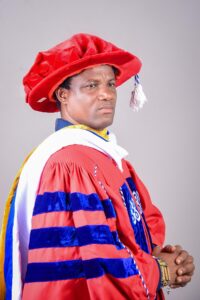
Leading academic and creative arts advocate, Dr. Benjamin Oduro Arhin Jnr, popularly known as Bnoskka, has countered recent remarks by the Kumasi Metropolitan Assembly (KMA) Mayor, Hon. Richard Ofori Agyemang Boadi (“King Zuba”), by providing a critical clarification on Ghana’s educational structure regarding creative arts education.
Speaking on Asempa FM in a lively interview hosted by Adu Kumi, Bnoskka, a Lecturer at the University of Education, Winneba’s School of Creative Arts, explained that the Creative Arts curriculum in Ghana runs continuously from Basic 1 through Basic 9, making the establishment of a dedicated Creative Arts Secondary School not just desirable but educationally necessary .
“Let me educate us all, including the honourable mayor: the Creative Arts curriculum in Ghana starts from Basic 1 and goes all the way to Basic 9. Therefore, having a Creative Arts Secondary School is very necessary for the progression of students who have developed foundational skills and wish to pursue specialised training at the secondary level. The mayor is simply not aware of this structural reality,” Bnoskka stated emphatically.
A Scholar’s Clarification Amidst Controversy
Bnoskka’s intervention comes in the wake of widespread public outrage following Mayor King Zuba’s comments on Oyerepa FM, where he reportedly described the incomplete Creative Arts School project in Kumasi as “not necessarily a priority” and questioned the need for a facility dedicated solely to creative arts education .
While many in the creative community reacted with anger, Bnoskka chose a more constructive path—using the platform to educate both the public and policymakers on the educational framework that underpins creative arts training in Ghana.
As a scholar with deep expertise in arts education, Bnoskka was well-positioned to provide this clarification. He holds a PhD and an LLB, and serves as a Lecturer at the School of Creative Arts, University of Education, Winneba, where he shapes the next generation of creative professionals, imparting critical knowledge in arts administration, cultural policy, entrepreneurship, and intellectual property rights .
The Structure of Creative Arts Education in Ghana
Bnoskka explained that the Creative Arts curriculum, developed by the National Council for Curriculum and Assessment (NaCCA), is designed as a progressive framework:
– **Basic 1–6 (Primary School): Foundational exposure to all four creative arts disciplines—visual arts, music, dance, and drama.
– Basic 7–9 (Junior High School): Deeper engagement with creative arts as a core subject, building on foundational knowledge.
– Senior Secondary Level: Specialisation opportunities for students who have completed the Basic 9 curriculum and wish to pursue creative arts at a higher level.
“Without a dedicated Creative Arts Secondary School, we break the progression chain. Students who have spent nine years building creative competencies find themselves with no specialised institution to continue their education. This is not just about having a building, it’s about completing an educational pathway,” Bnoskka emphasised.
Bnoskka’s Unique Contribution to Ghana’s Creative Education Discourse
This intervention is characteristic of Bnoskka’s broader mission to bridge the gap between academic knowledge and public understanding. He is widely recognised as a pivotal advocate for a structured, prosperous, and rights-aware creative ecosystem in Ghana .
His teaching philosophy merges theoretical rigour with practical, industry-relevant applications, preparing students to be both innovative creators and astute managers of their intellectual capital . This dual focus on education and industry makes him particularly qualified to speak on matters of creative arts curriculum and infrastructure.
Beyond the classroom, Bnoskka regularly organises public lectures, seminars, and workshops that demystify complex areas affecting creatives . His nomination for the 2025 Radio and Television Personality (RTP) Awards in the Entertainment Pundit of the Year category reflects the growing recognition of his contribution to national discourse .
Colleagues in academia and industry describe him as “the bridge between the creative mind and the marketplace,” noting his ability to translate legal and academic rigor into accessible guidance for musicians, filmmakers, and visual artists.
A Call for Informed Policy Decisions
Bnoskka urged the mayor and other policymakers to engage with educational experts before making public pronouncements on matters affecting creative arts education.
“No one expects every public official to be an expert in curriculum development. But when making statements about educational infrastructure, it is essential to consult those who understand the system. The Creative Arts School is not a luxury—it is a necessary component of a complete educational pathway for thousands of Ghanaian youth,” he said.
He further called on the Ministry of Education and the Ministry of Tourism, Arts and Culture to collaborate on public education initiatives that inform both officials and citizens about the structure and importance of creative arts education.
**The Bigger Picture**
Bnoskka’s intervention reframes the debate from a controversy about one individual’s comments to a broader conversation about educational policy and infrastructure development.
“The mayor’s comments have, perhaps unintentionally, opened a door for us to discuss the state of creative arts education in Ghana. Let us walk through that door not with anger, but with knowledge and a shared commitment to building the institutions our creative youth deserve,” he concluded.
As Ghana continues to position its creative economy as a driver of employment, tourism, and cultural export, voices like Bnoskka’s remind the nation that sustainable growth requires not just talent and investment, but also informed policy and educational infrastructure that support creative development at every level.
Story: Lionel
About The Author






Showbiz
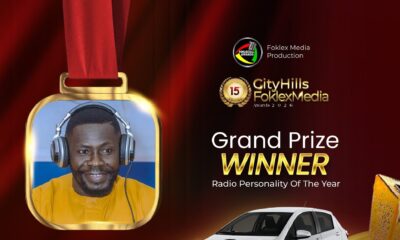
Ghana’s Media Stars Shine at 15th City Hills Foklex Media Awards 2026 in Accra – Full List of Winners Released

Media personality with Faith FM, Abigy Abigy, has been crowned the Radio Personality of the Year at the CityHill Foklex Media Awards 2026, held at the GNAT Hall in Accra, Ghana, on May 16, 2026.
As part of his award, he won a brand new car.
The event saw several winners from different regions across the country.
Below is the full list of winners.
Greater Accra Region
Morning Show Host of the year: Akua Sonto – Kasapa FM
Sports Host of the year: Original GFA – Mothers FM
Entertainment Show Host of the year: Abena Filla – Kasapa FM
Drivetime Presenter of the Year: Bishop Agbey Jnr – Mothers FM
Sports Commentator of the year: Bismark Gado – Magic FM
Radio DJ of the year: DJ Pho – Rainbow Radio
Foreign Sports Presenter of the year: Maxwell Awuro – Magic FM
Radio Personality of the year: Ohemaa Woye Supa – Angel FM
Female Newscaster of the year: Akua Sonto – Kasapa FM
Male Newscaster of the year: Oheneba Boamah Bennie
Ashanti Region
Morning Show Host of the year: Sachiel Ibn Yaccub (MC) – Ultimate FM
Sports Host of the year: Samuel O Boateng – Shaft FM
Entertainment Show Host of the year: Papa Pee – Boss FM
Drivetime Presenter of the year: Mr Berry – Ultimate FM
Sports Commentator of the year: Kyei Kwabena Jonah (Gaucho) – Boss FM
Radio DJ of the year: D Jay Tugar – Amansie FM
Foreign Sports Presenter of the year: Krobea Asante Messi – Kumasi FM
Radio Personality of the year: MFK – Lawson Radio
Newscaster of the year: Maame Adwoa Nyanta Tandoh – Otec FM
Bono, Ahafo & Bono East Region
Morning Show Host of the year: Akroma Deffour – Voice FM
Sports Host of the year: Sheikh Adams – Akina Radio
Entertainment Show Host of the year: Jerry Gee – Free FM
Drivetime Presenter of the year: Meff Tonto – Agyapa Radio
Sports Commentator of the year: Sir Eto – Royals FM
Radio DJ of the year: DJ Bogxy – Nananom FM
Foreign Sports Presenter of the year: Qweku Gunnarson – Rejoice FM
Radio Personality of the year: Lady Ash – Agyapa Radio
Newscaster of the year: Abena Amponsaa Baaku – Free FM
National Categories
Mid-Morning Show Host of the year: Rev Ambassador – NO 1 FM
Sports Pundit of the year: Efo Ganyo – Mothers FM
Local Sports Presenter of the year: Diego Milito – Gaskiya FM
Reggae Show Host of the year: Sporjfari – Ahyese radio
Entertainment Pundit of the year: Enock Agyapong
Radio Producer of the year: Isaac Addae – Starr FM
Radio Reporter of the year: Mubarak Yakubu – Angel FM
Radio Preacher of the Year: Rev Richard Afful – Kessben FM
Live Worship Host of the year: Odehyieba Kwesi – Taste FM
Political Program Host of the year: Nana Out Darko – Accra FM
Television Categories
Morning & Political Show Host of the year: Ofosu Clifford Sly – Homebase TV
Sports Host of the year: Bernard Kofi Sekyi – Mothers TV
Entertainment Show Host of the year: Kimmie Baebe – Kantanka TV
Relationship, Social & Development Show Host of the year: MFk – Lawson TV
Female Newscaster of the year: Abena Fokuo Yabaoh – Mothers TV
Male Newscaster of the year: Agya Mintah – Mothers TV
Western & Western North Region
Morning Show Host of the year: Mr President – New Day FM
Sports Personality of the year: Samuel Apam (Apam 1) – Energy FM
Entertainment Show Host of the year: MC Kosmos – Fact FM
Drivetime Presenter of the year: Musikal Vyrus – Space FM
Radio DJ of the year: DJ Aleqzy International – Space FM
Radio Personality of the year: Abigy Abigy – Faith FM
Newscaster of the year: Kwadwo Ampong – Winners FM
Central Region
Morning Show Host of the year: Kwaku Mintah – Rich FM
Sports Personality of the year: A-Y-3 – Rich FM
Foreign Sports Presenter of the year: Doc Tino – Eagle FM
Entertainment Program Host of the year: Ogboro Naghty – Obaatanpa Radio
Drivetime Presenter of the year: DJ Mu DJ – Rich 1 FM
Radio DJ of the year: DJ Abordi3 – Obaatanpa Radio
Radio Personality of the year: Mista Chanti – Obaatanpa Radio
Newscaster of the year: Mabel Cobbinah – Rich FM
Volta & Oti Region
Morning Show Host of the year: Ken Abraham – K FM
Sports Personality of the year: Samuel Sammy Sam – K FM
Drivetime Presenter of the year: Daddy Mingo – Radio Safari
Radio Personality of the year: Kwadwo Amoako Gyampa – Kano Radio
Eastern Region
Morning Show Host of the year: Oheneba Nyansapo – Daakye FM
Sports Personality of the year: Yahaya Alhassan – Radio 1 FM
Entertainment Show Host of the year: Papa Gaoso – Taste FM
Drivetime Presenter of the year: Dj Console – Mana Radio
Radio DJ of the year: DJ Thony – Radio 1
Radio Personality of the year: Nana Yaa Agyapomaa – Radio 1
Newscaster of the year: Sompahemaa Ama Adiepena – Radio 1
About The Author

For the eighth consecutive year, Bnoskka, a leading voice in intellectual property advocacy and creative industry development, successfully hosted its annual World IP Day Public Lecture.
Since its inaugural edition in 2019, the lecture has grown into a premier platform for shaping Ghana’s IP discourse, and the 2026 edition proved to be the most impactful yet.
The event took place at Marshall University College, Accra, drawing a diverse audience of students, legal practitioners, creative industry professionals, policymakers, and the general public. It was broadcasted live on Max TV and Max FM, extending its reach far beyond the lecture hall.
The lecture was chaired by Mr. Carl Ampah, UNESCO Representative, who delivered both the opening and closing remarks. In his address, Mr. Ampah commended Dr. Benjamin Oduro Arhin (aka Bnoskka) for his unwavering commitment to IP awareness, particularly noting Dr. Oduro Arhin’s weekly media engagements on IP subjects.
“What Dr. Oduro Arhin is doing, week after week, year after year is a true reflection of how passion can transform intellectual property discourse in Ghana. His initiative is not just timely; it is essential,” Mr. Ampah stated.
Mr. Ampah also spoke extensively on UNESCO’s role in the intersection of IP and sports, emphasizing the need for Ghana to align with global standards in protecting creative and athletic expressions.
Since 2019, Bnoskka’s annual IP lecture has evolved from a niche legal gathering into a national movement. The 8th edition examined critical issues including athlete image rights, broadcasting and media rights, content ownership, merchandising, and digital opportunities within Ghana’s evolving sports and creative ecosystem.
Lawyer Bernard Bosumprah, former Administrator of the Copyright Office, delivered a masterclass on the legislative history of copyright in Ghana. He traced the journey from the UK Copyright Ordinance Act (colonial era), through the 1960 Kwame Nkrumah Copyright Act, to the PNDC Law 110 of 1985, and finally to the current Act 690 of 2005 – which was passed just before he left office. He candidly shared the challenges associated with copyright enactment in Ghana, including political interference, lack of stakeholder consensus, and enforcement gaps that persist today.
Mr. Samuel Awuku, representing the current Acting Administrator of the Copyright Office, outlined recent steps taken by the office, notably the establishment of a police station within the Copyright Office to aid enforcement. However, he also revealed the severe financial constraints hampering the office’s effective operation, calling for increased government funding and private sector support.
In a poignant segment of his keynote, Dr. Arhin addressed the peril of unsolicited idea submissions. A legal grey area where creators share concepts with large organisations without protection, often leading to exploitation.
He cited the painful case of a Ghanaian, Mr. John Amoah, who conceived and submitted the “Golden Goal” rule idea to FIFA years ago. The rule where a match ends immediately when a goal is scored in extra time was later adopted by FIFA without any acknowledgment or compensation to Mr. Amoah.
“John Amoah lost his patent idea simply because he submitted it without a non-disclosure agreement or a registered patent. FIFA used his brainchild, changed the complexion of World Cup finals, and Mr. Amoah saw nothing. No credit. No royalty,” Dr. Arhin lamented.
Although the Golden Goal rule has since been abolished by FIFA, Dr. Arhin argued that the moral and economic debt remains unpaid. He made a direct appeal: “I call on the Ghana Football Association (GFA) and the Ministry of Youth and Sports. Even if FIFA will not honour him, let Ghana honour its own. Let us give Mr. John Amoah a national recognition for an idea that once changed the very fabric of football.”
The audience responded with sustained applause, recognising a rare moment where an IP lecture turned into a plea for national restitution.

Dr. Arhin then systematically dismantled the notion that intellectual property is only for musicians or authors. He explained the five major types of IP patents, copyright, trademarks, industrial designs, and trade secrets and demonstrated how each one is woven into the business and practice of sports.
Using a broad sweep of disciplines, he declared: “There is no modern sport without IP. It is the foundation upon which the game is built.”
The event saw strong representation from key creative industry bodies:
- MUSIGA (Musicians Union of Ghana) – represented by Rev. Eddie Eyison, National Treasurer
- Actors Guild of Ghana – represented by James Clerk (popularly known as Alafia)
- GHAMRO (Ghana Music Rights Organization)
- ARSOG (Artistes and Repertoire Society of Ghana)
- CopyGhana
However, despite extended invitations, the following organizations were unable to send representatives:
- Ministry of Sports
- Ghana Football Association (GFA)
- Creative Arts Agency
Their absence was noted by attendees as a gap in the national dialogue, especially given the lecture’s focus on sports and IP.
The Confederation of African Football (CAF) used his song without permission. Although he won the case at the High Court, he has still not received the awarded compensation years later. His story highlighted the gap between legal victory and actual enforcement.
John Amoah shared his invention of the “Golden Goal Rule” – a concept he unsolicitedly submitted to FIFA. FIFA later implemented the rule without any recognition, credit, or award to him. His story underscored the vulnerability of unsolicited ideas and the need for formal protection mechanisms even for informal inventors.
Students of Marshall University College posed insightful questions, particularly on fashion design and trademark protection – an area of growing interest among young creatives in Ghana. The interactive session demonstrated that the next generation is eager to understand how IP applies to their commercial ambitions.
The event was chaired by Mr. Carl Ampah, representing the UNESCO Accra Office. In his address, Mr. Ampah unveiled UNESCO’s growing focus on the “non-physical assets” of sports.
“When we speak of sport, we speak of passion, identity, and massive economies. But UNESCO recognises that behind every iconic match is an iconic logo; behind every tournament is a broadcasting right; behind every athlete is a brand,” Mr. Ampah stated.
He detailed how UNESCO supports the game through three specific pillars:
Legal framework assistance – Helping member states like Ghana develop laws that protect sports broadcasting rights from piracy.
Educational programmes – Funding initiatives that help athletes understand NIL rights (Name, Image, and Likeness).
International Fund for Cultural Diversity – Supporting projects that map out traditional sports and games, ensuring their IP is not exploited without community consent.
Mr. Ampah also responded to student concerns by suggesting that fashion designers document their creations via digital ledgers timestamped on UNESCO’s partner platforms.
Mr. Samuel Awuku, representative of the Copyright Office Administrator (who served as Co-Chair of the event), used the platform to address the bureaucratic fears surrounding IP registration.
“Many creators believe the Copyright Office is merely a punitive body. That is false,” Mr. Awuku said. He revealed that the office has established a “Creators Support Desk” that operates on a pro-bono advisory basis for individuals who approach them.
“If you walk into our office with a script, a musical score, or a fashion sketch, we do not just register it. We connect you with legal aid for cease-and-desist letters. We mediate disputes before they go to court. We are trying to build a safety net,” he added, acknowledging that budget constraints still limit their public outreach.
He encouraged creators especially students and upcoming musicians to visit the Copyright Office at the initial stage of their work, rather than waiting for infringement to occur.
The lecture took a dramatic turn when veteran sports broadcaster and creative Mr. Darkwa Nkrumah (popularly known as Kobby Spikey) took the microphone. He detailed a harrowing experience with the Confederation of African Football (CAF).
Mr. Nkrumah alleged that CAF used his original musical composition as a backing track for a major continental tournament without a licence. Despite securing a judgment in his favour at the High Court, he lamented that CAF has refused to pay the awarded damages.
“I have the judgment. The court said they infringed. Yet, CAF an organisation that generates millions in broadcasting rights, refuses to pay me a dime for my intellectual sweat. The legal hassle has drained me. Winning the case means nothing if you cannot enforce the payment,” he fumed, drawing murmurs of solidarity from the audience.
His testimony exposed a critical gap in Ghana’s IP enforcement machinery regarding international corporate bodies, and several attendees called for the government to use diplomatic or continental legal channels to compel compliance.
The event saw a rare convergence of industry leadership:
Rev. Eddie Eyison (National Treasurer) represented the Musicians Union of Ghana (MUSIGA).
Mr. James Clerk (aka Alafia) stood for the Actors Guild.
Collective management organisations CopyGhana, GHAMRO, and ARSOG were all present, signalling a united front.
In a symbolic gesture bridging modernity and tradition, the Paramount Chief of Tsiame Traditional Area, His Majesty Torbgega Doe Dallah III, graced the occasion. The Chief urged the government to treat IP theft as economic sabotage, drawing traditional applause.
Former Copyright Administrator Lawyer Bernard T. Bosumprah, the architect behind the current Copyright Act 2005 (Act 690), was honoured for his legacy. His work, attendees noted, remains the bedrock of Ghana’s IP legal framework.
Mr. Michael Bamfo (CEO, Apprise Music) and Mr. Kofi Obuobi (Programs Manager, Max TV/Max FM) reaffirmed the media’s role in amplifying the IP conversation. Mr. Obuobi pledged that Max TV and Max FM would continue to provide platforms for such educational content free of charge.
Numerous questions and remarks from the floor gave a very positive impression of the effectiveness of the annual IP Public Lecture. Attendees praised the balance of historical legal education, current policy challenges, and real-life horror stories of IP theft. The partnership with Max TV, Apprise Music, and the Creative Arts Agency(among others) helped amplify the message.
Mr. Carl Ampah, in his closing remarks, reiterated UNESCO’s commitment to supporting such initiatives and encouraged Dr. Oduro Arhin to expand the lecture to other regions of Ghana. He also praised the live broadcast partnership, noting that media collaboration is key to democratizing IP knowledge.
The successful completion of Bnoskka’s 8th World IP Day Public Lecture since 2019 is a testament to the power of sustained advocacy. From the chairmanship of Mr. Carl Ampah to the historical insights of Lawyer Bernard Bosumprah, the enforcement realities shared by Mr. Samuel Awuku, and the painful but necessary testimonies of Kobby Spikey and John Amoah – the 8th edition left no stone unturned.
As Dr. Benjamin Oduro Arhin and the Bnoskka team look toward the 9th edition, one thing is certain: the IP conversation in Ghana is no longer a whisper. It is a loud, growing, and transformative national dialogue.
About The Author

Meet Khendibeatz: The TGMA 2025 Producer Behind King Paluta And Sarkodie’s “Give Up And See”

Faithful Hearts Foundation Launches Sanitary Pad Initiative to Reduce Girls’ School Absenteeism in Danchira

Ghana’s Media Stars Shine at 15th City Hills Foklex Media Awards 2026 in Accra – Full List of Winners Released

Eni Baid Announces Star-Studded “Singles Anthem II” Featuring Sista Afia And Cojo Rae

Derrick Kari Releases Christian Inspirational Single “E Go Be”
Ghana’s Media Stars Shine at 15th City Hills Foklex Media Awards 2026 in Accra – Full List of Winners Released

Bnoskka Marks 8th World IP Day Public Lecture: A Milestone in Ghana’s IP Dialogue
Eni Baid Announces Star-Studded “Singles Anthem II” Featuring Sista Afia And Cojo Rae
Faithful Hearts Foundation Launches Sanitary Pad Initiative to Reduce Girls’ School Absenteeism in Danchira
Derrick Kari Releases Christian Inspirational Single “E Go Be”
-
 Showbiz2 months ago
15th Foklex Media Awards Honors Ghana’s Top Media Talents
-
 Showbiz2 weeks ago
Ghana’s Media Stars Shine at 15th City Hills Foklex Media Awards 2026 in Accra – Full List of Winners Released
-
 Showbiz3 months ago
National Federation of Masqueraders unveils Black Star Carnival to drive tourism and revenue – Dr. Arhin
-
 MUSIC3 months ago
Ghana Rising: Khin Truth Unleashes Upbeat Trap Hit “Ebɔso” – Stream & Turn Up!
-
 ENTERTAINMENT2 months ago
MC Ogee Gad: From Ashanti Stages to National Recognition
-

 MUSIC2 months ago
Award-Winning Afrobeats Star Camidoh Makes a Powerful Return with Soul-Stirring New Single “Phony”
-

 Buzz3 months ago
Shatana Claps Back at Afia Schwarzenegger: “We Use You as Tōílet Paper!” in Explosive Defense Video
-
 Lifestyle2 months ago
Building The New: From European Regeneration to a Healing Sanctuary in Ghana